
Acne is an abnormal condition of hair follicles and sebaceous glands under the skin. When pores become clogged with oil, dead skin cells, and bacteria, bumps or inflammation occur on the skin.
Commonly found on:
- Face
- Chest
- Back
- Shoulders
Acne can affect people of all genders and ages, but is most common during adolescence and early working years.
What Causes Acne?
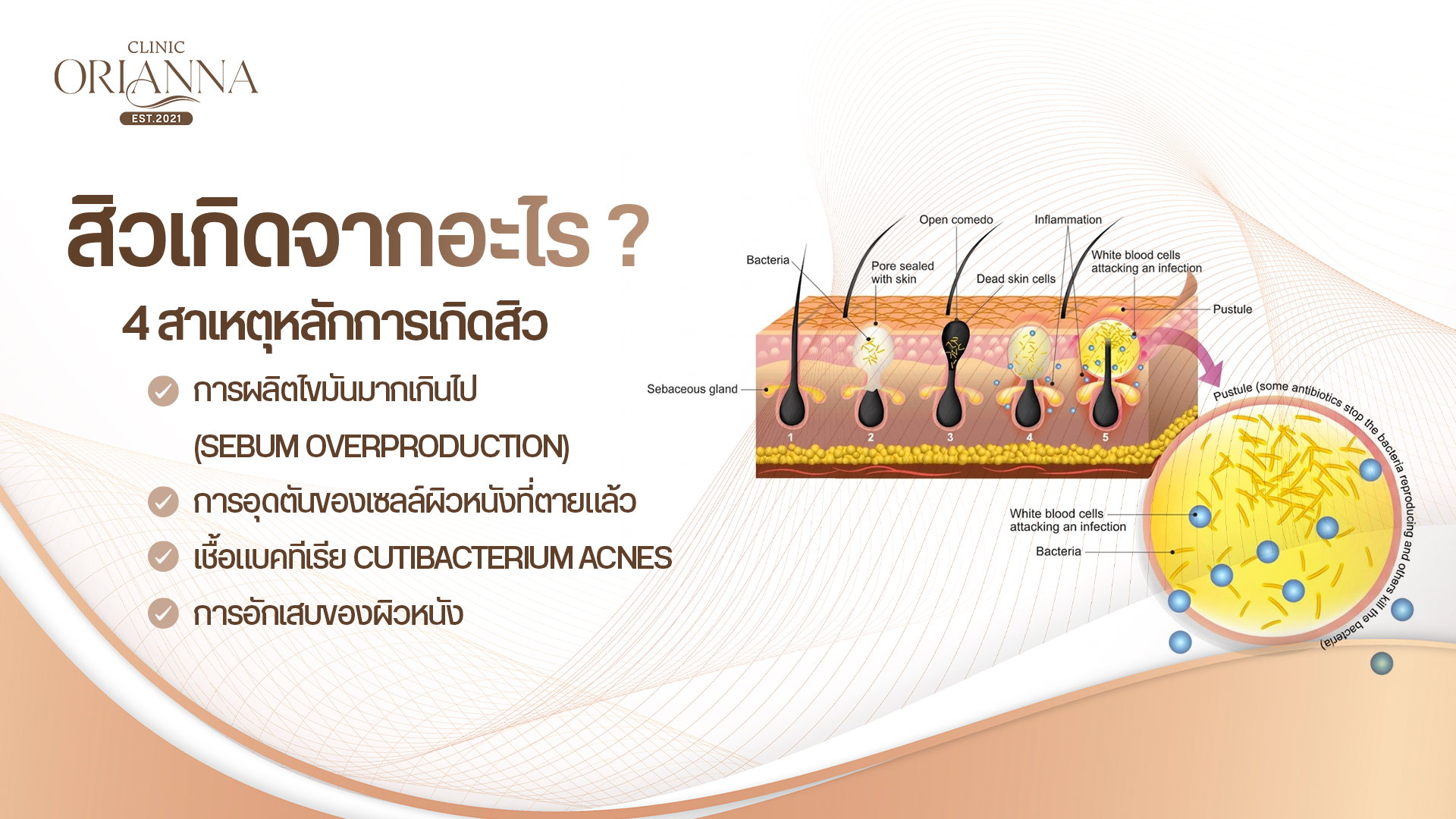
4 สาเหตุหลักการเกิดสิว
There are 4 main causes of acne:
- Sebum Overproduction
- Clogging of dead skin cells
- Cutibacterium acnes bacteria
- Skin inflammation
Contributing factors that trigger acne flare-ups:
- Hormonal changes
- Stress
- Pore-clogging cosmetics
- Insufficient rest
- Certain foods
How Many Types of Acne Are There?
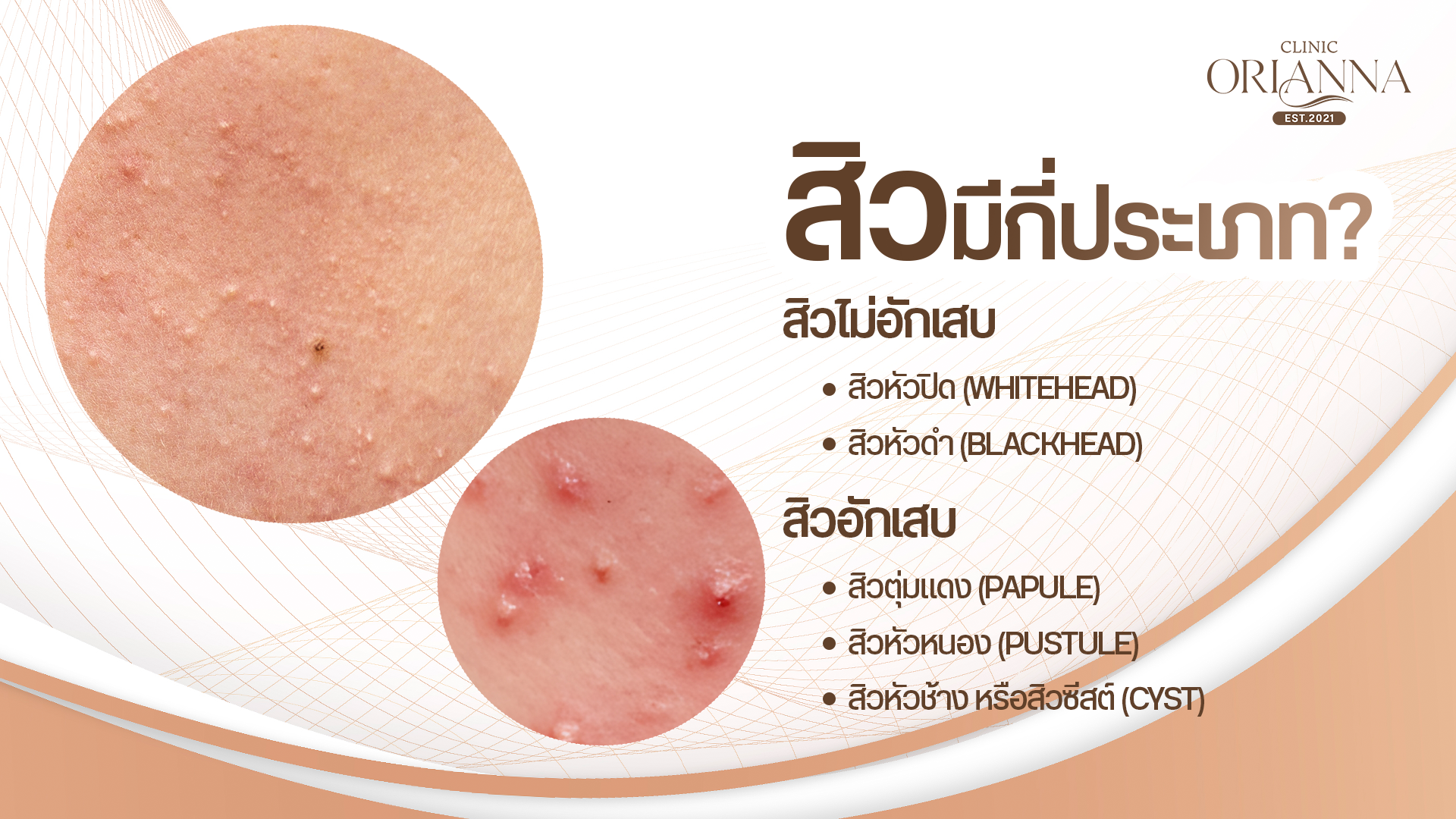
ประเภทของสิว สิวไม่อักเสบและสิวอักเสบ
Generally divided into 2 main groups:
1) Non-inflammatory Acne
- Whitehead
- Blackhead
2) Inflammatory Acne
- Papule
- Pustule
- Nodular/Cystic Acne
How is Clogged Acne Different from Inflammatory Acne?
| Clogged Acne | Inflammatory Acne |
|---|---|
| No pain | Painful, swollen, red |
| Just clogging | Infection and inflammation |
| No pus | May contain pus |
| Rarely leaves deep marks | Risk of dark spots and scars |
What Causes Blackheads?
Blackheads form when open pores become clogged with sebum. When exposed to air, oxidation occurs, turning them black.
Commonly found on:
- Nose
- Chin
- Forehead
Not caused by dirt, but by the chemical reaction of sebum with air.
What Causes Whiteheads?
Whiteheads form from sebum clogging under the skin with closed pores, appearing as small white bumps.
Key characteristics:
- No open head
- Slightly painful when pressed
- May develop into inflammatory acne if left untreated
What is Hormonal Acne?
Hormonal acne is caused by changes in hormone levels, especially androgens that stimulate increased oil production. Often found:
- Around the jawline and chin area
- Before menstruation
- In working age
- Typically appears as large, painful inflammatory acne that recurs in the same area
What is Chronic Acne?
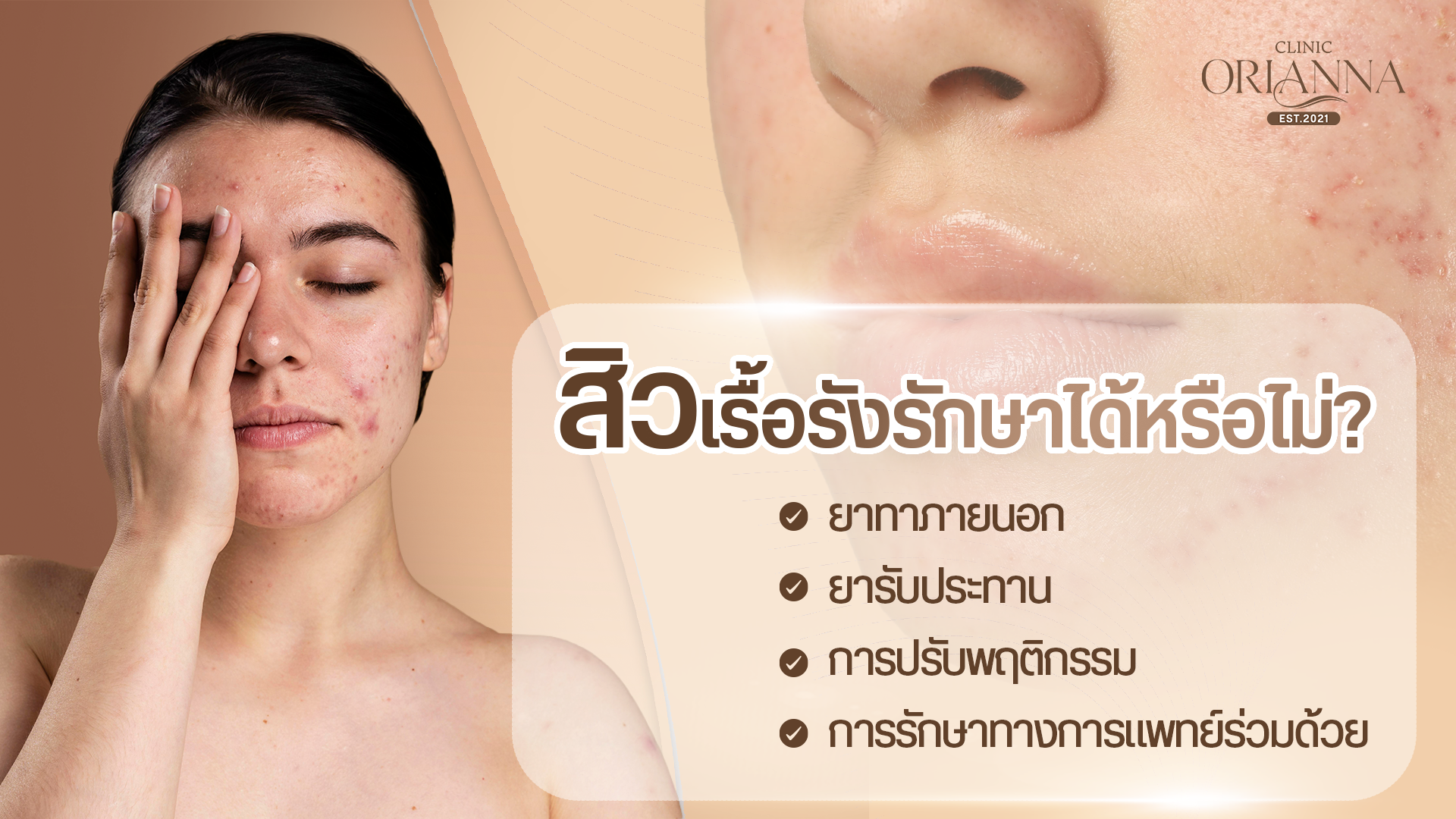
สิวเรื้อรังรักษาได้หรือไม่
Chronic acne is acne that persists for more than 3–6 months or keeps recurring after healing.
Often related to:
- Hormonal imbalances
- Improper skincare
- Inconsistent treatment
- Should be properly assessed and treated with a suitable plan
How is Nodular Acne Different from Regular Acne?
Nodular/Cystic Acne is severe inflammatory acne deep under the skin.
Key characteristics:
- Large bumps
- Red and swollen
- Very painful
- Risk of permanent scarring
Do not squeeze yourself as it may worsen inflammation.
Can Acne Heal on Its Own?
The answer depends on the type of acne:
- Mild clogged acne may resolve on its own
- Moderate to severe inflammatory acne usually requires treatment
- Nodular or chronic acne should consult a specialist
Leaving inflammatory acne untreated for long may cause:
- Dark spots
- Red marks
- Acne pit scars
Popular Questions About Acne Treatment You Should Know
Why Does Acne Come Back After Getting Better?
Reasons why acne doesn't clear completely:
- Not addressing the "root cause" such as hormones or lifestyle habits
- Using products unsuitable for the acne type
- Stopping treatment before completing the course
- Recurring triggers such as stress and insufficient rest
Acne is a controllable condition, but requires consistent and targeted care.
Can Chronic Acne Be Treated?
Chronic acne can be controlled with proper cause analysis.
May require:
- Topical medications
- Oral medications
- Behavioral changes
- Combined medical treatments
The key is consistency and follow-up.
What Should You Do If You've Had Acne for Years?
If you've had acne for many years, you should:
- Assess severity level
- Check for hormonal factors (if hormonal acne is suspected)
- Avoid trial-and-error treatments
- Plan long-term systematic treatment
Why Does Acne Appear After Stopping Certain Products?
This may occur due to:
- Skin dependency on anti-inflammatory agents
- Hidden steroid ingredients
- Rebound acne
- Skin losing balance after stopping use
Adjust your skincare routine gradually.
What Causes Acne Flare-ups?
Acne flare-up is a condition where many pimples appear simultaneously in a short period.
Often caused by:
- Product allergies
- Over-exfoliation
- Stress
- Hormonal fluctuations
Can You Squeeze Inflammatory Acne?
It is not recommended to squeeze inflammatory acne yourself.
Because:
- Risk of additional infection
- Worsened inflammation
- Dark spots and scarring
Let a specialist assess before any procedure.
Can Improper Squeezing Cause Acne Scars?
The answer is "highly likely"
Improper acne squeezing can cause:
- Pore wall rupture
- Deeper inflammation under the skin
- Permanent acne scars
How to Treat Acne Effectively?
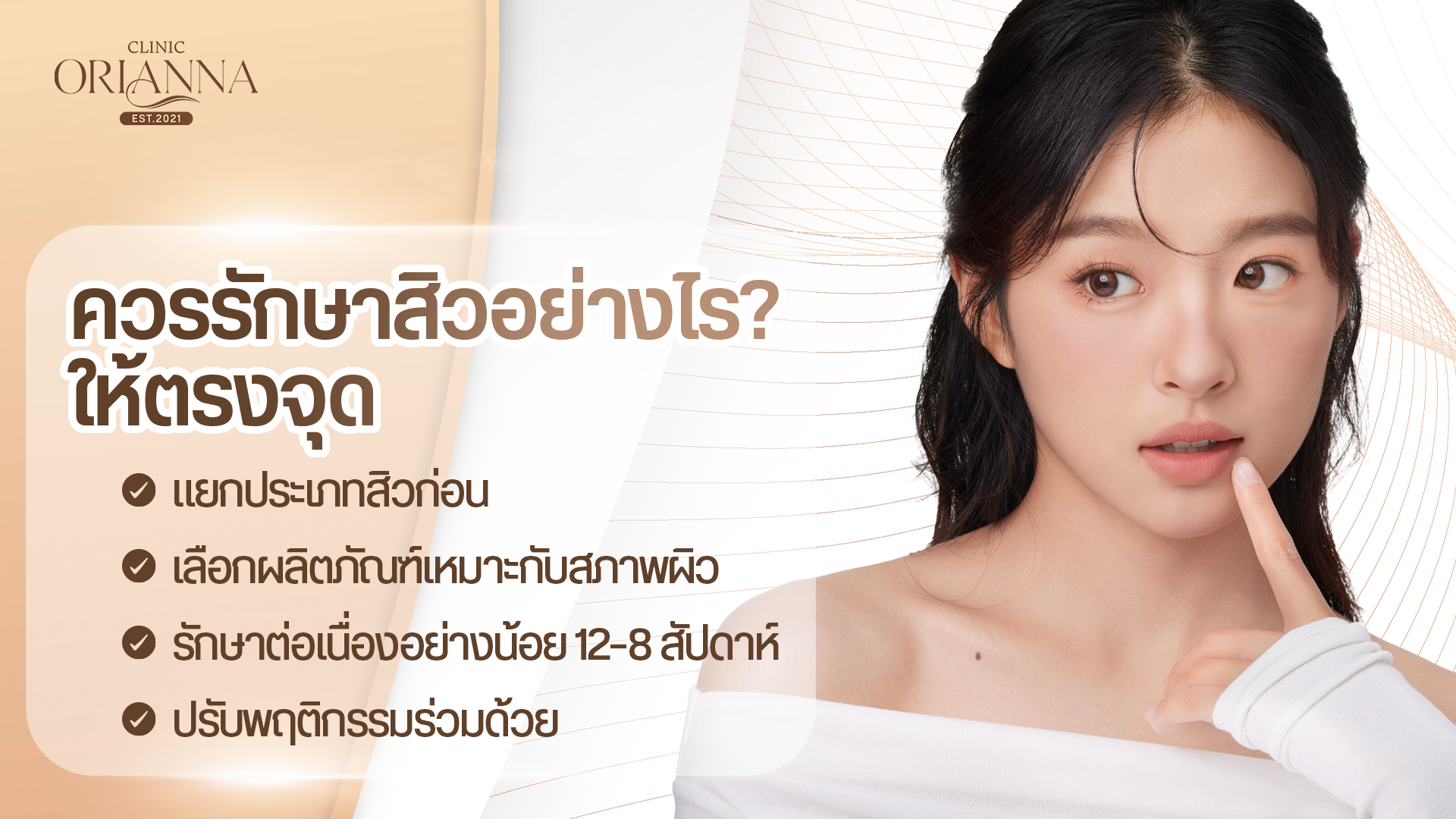
ควรรักษาสิวอย่างไรให้ตรงจุด
Correct treatment principles:
- Identify the acne type first
- Choose products suitable for your skin condition
- Continue treatment for at least 8–12 weeks
- Adjust behavior as well
How Long Does Acne Treatment Take?
Generally:
- Mild acne: 1–2 months
- Moderate acne: 2–4 months
- Severe acne: 4–6 months or more
Acne treatment takes time because the skin cycle is approximately 28 days.
When Should You See a Doctor for Acne?
See a doctor when:
- Severe inflammatory acne
- Chronic recurrence
- Scarring begins
- Self-treatment shows no improvement in 2–3 months
What Level of Acne Risks Scarring?
Acne with high scarring risk includes:
- Nodular acne
- Cystic acne
- Deep inflammatory acne
Especially if squeezed or picked at.
Can Exfoliation Help Reduce Acne?
Exfoliation can help reduce clogged acne.
But should:
- Use appropriate concentration
- Not do it too frequently
- Be careful with sensitive skin
Can Acne Be Prevented?
Acne can be prevented to some extent by:
- Washing face properly
- Choosing non-comedogenic products
- Getting adequate rest
- Reducing stress
Does Acne Care Differ by Type?
The answer is "yes, it differs"
- Clogged acne → Focus on exfoliation
- Inflammatory acne → Focus on reducing inflammation
- Hormonal acne → May need hormonal control as well
Conclusion: Understand Acne Properly, Care with Confidence
Acne is not a trivial matter, but it's not unsolvable either.
Acne problems arise from multiple factors including hormones, clogging, inflammation, and lifestyle habits. Effective treatment must start with "understanding the type of acne" and choosing appropriate care — without rushing and with consistency.
The most important things are:
- Don't treat with trial and error
- Don't stop care midway when symptoms improve
- Don't squeeze or pick acne yourself
With proper care, acne can be controlled, recurrence reduced, and long-term scarring risk minimized.
Good skin starts with correct understanding and consistent care.
What is Hormonal Acne?
Hormonal Acne is a condition directly related to hormonal fluctuations in the body, especially Androgens, which stimulate the Sebaceous Glands to produce more Sebum, leading to Comedogenesis and Inflammation.
Medically, hormonal acne is commonly found during Puberty, early working years, and into adulthood, especially in women before menstruation (Premenstrual Flare).
What Causes Hormonal Acne?
The main causes involve 4 mechanisms (Pathophysiology of Acne):
- Sebum Overproduction – Excessive oil production
- Follicular Hyperkeratinization – Abnormal skin cell shedding
- Cutibacterium acnes Proliferation – Bacterial multiplication
- Inflammatory Response – Skin inflammation process
In hormonal acne, the most important factor is Androgen Stimulation that directly stimulates sebaceous glands.
Check Now! What Does Hormonal Acne Look Like?
Clinical Characteristics:
- Deep Inflammatory Nodules
- Tender Lesions (painful when pressed)
- Recurrent in Same Area
- Often flares 7–10 days before menstruation
- Heals slower than regular acne
Where Does Hormonal Acne Usually Appear?
Known as the "Hormonal Acne Distribution Pattern":
- Jawline
- Chin
- Perioral Area
- Lower Neck
These areas have denser Androgen Receptors than other areas.
Additional Causes of Hormonal Acne
Triggering Factors:
- Stress (Stress-Induced Cortisol Elevation)
- Sleep Deprivation
- PCOS (Polycystic Ovary Syndrome)
- Changing birth control pills
- High Glycemic Index Diet
Research shows that Insulin and IGF-1 can increase androgen production.
How is Hormonal Acne Different from Other Acne?
| Hormonal Acne | Regular Clogged Acne |
|---|---|
| Deep, painful bumps | Shallow, painless bumps |
| Related to menstrual cycle | Not related to menstrual cycle |
| Usually on jawline | Can appear anywhere on face |
| Slow healing | Faster healing |
Hormonal Acne Treatment
Evidence-Based treatment approaches:
1. Topical Therapy
- Retinoids
- Benzoyl Peroxide
- Azelaic Acid
2. Oral Medication
- Oral Contraceptives
- Spironolactone
- Isotretinoin (for severe cases)
3. Advanced Aesthetic Treatment
- Light & Laser Therapy
- Chemical Peels
- Acne Injection (Intralesional Corticosteroid)
Self-Care for Hormonal Acne
- Sleep at least 6–8 hours
- Reduce high-sugar foods
- Exercise regularly
- Avoid squeezing or pressing acne
- Use Non-comedogenic products
Prevention and Lifestyle Modification
- Control stress levels
- Practice Mindfulness or Meditation
- Choose Low GI Diet
- Balance gut health (Gut-Skin Axis Concept)
Current research supports that "Gut Microbiome" plays a role in skin inflammation.
When Will Hormonal Acne Go Away?
Hormonal acne usually improves when:
- Hormones reach balance
- Past adolescence
- Receiving appropriate treatment
Average recovery period: 8–12 weeks (Treatment Response Period)
Can Hormonal Acne Be Squeezed?
Self Extraction Not Recommended
Because:
- Risk of Acne Scarring
- Increased inflammation
- Post-Inflammatory Hyperpigmentation
Always consult a doctor before any procedure.
Hormonal Acne Summary
Hormonal acne is a complex condition involving the endocrine system (Endocrine Influence on Skin). Treatment requires accurate diagnosis combined with internal health care (Internal Balance) and external care (Topical & Procedural Care).
Key Takeaway: Effective long-term hormonal acne treatment doesn't just focus on external skin but requires systematic understanding of the body's hormonal mechanisms.
Orianna Clinic "Beauty in your own"